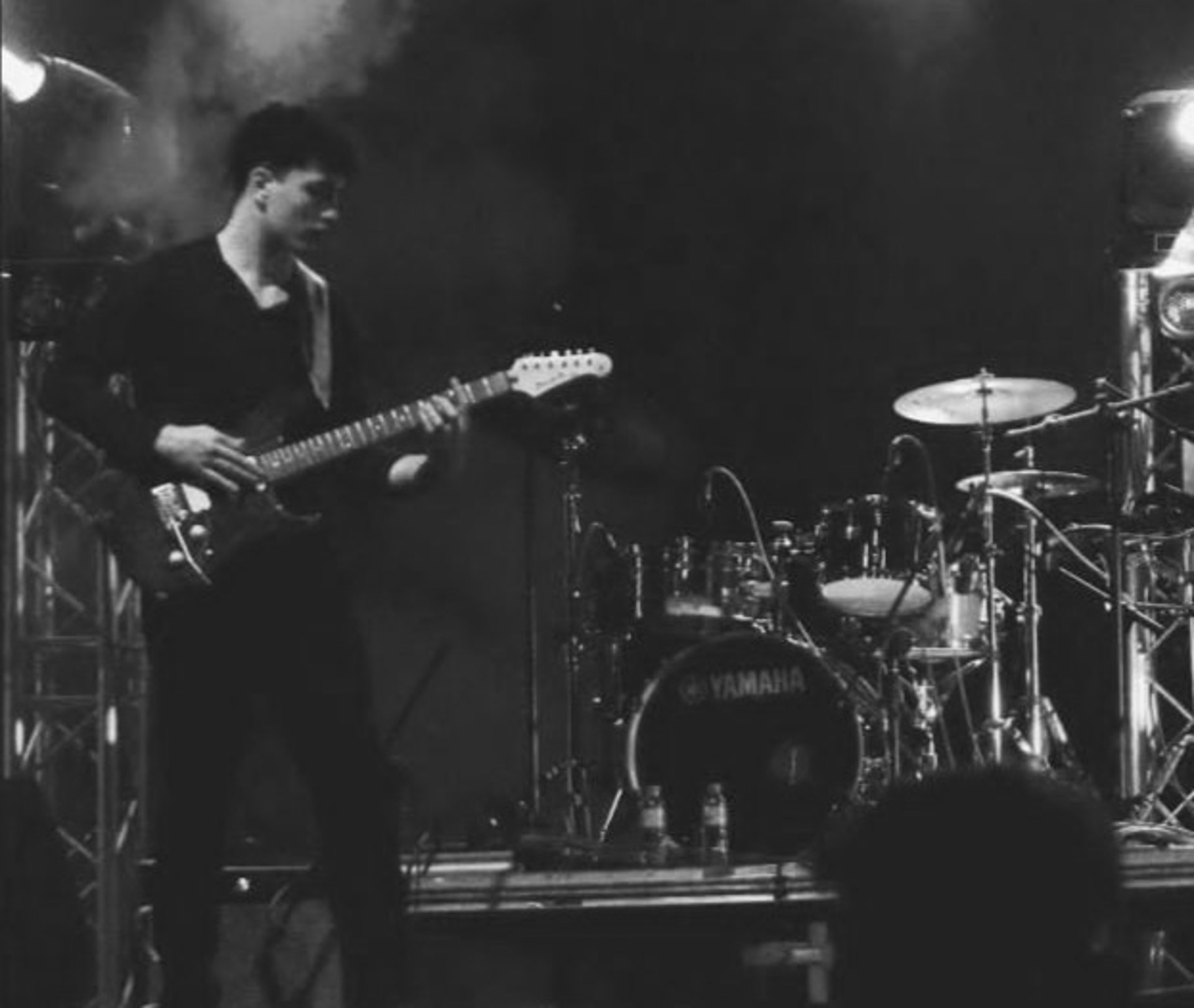
Meet Wes Fillmore
I was born in Girona, Spain as Hugo Navarro and started my musical journey at eight — self-taught on guitar, already obsessively dissecting every style and learning all the varieties of chords and its functions alongside the scales and rhythm.
At 13, I took formal lessons to master the execution of guitar and to expand my knowledge on harmony. By fourteen, I had formed three bands, playing guitar, bass, and keyboards — one playing pop and R&B, another Death and Thrash Metal, and a third experimental rock. Composition came naturally, then production. Working in studios taught me time management, equipment, song structures and the role of each instrument — how parts fit together and complement each other. I also learned how to collaborate with people, how to understand the way others work, and how to function alongside someone else creatively. And perhaps most importantly, I learned how to translate words into music — to listen to an idea and turn it into sound.
A scholarship to record an album gave me valuable experience. I learned about every stage of the recording process, though the final result didn't meet my expectations. That disconnect led me to learn mixing and mastering for myself.
Now in my 20s I bring a background as a producer, composer, performer, session player and teacher. My deep obsession with music and passion for endless genres means that when I compose, there are no boundaries. Only instinct.
Biography
Creative Process
Wes Fillmore draws inspiration from a wide range of composers and artists: from the classical elegance and complexity of John Williams, the production power of Hans Zimmer and the haunting atmosphere of Akira Yamaoka, to more unconventional and folkloric sources — such as the use of music in Russian cinema (Artemiev) or the delicate soundscapes of Japanese composers like Toru Takemitsu. His taste moves freely between the most extreme genres of metal, the flow of funk and soul, the sincerity of ballads and the most romantic melodies of flamenco.
All music resonates with him. Every influence, every texture, every piece of information becomes a tool he can use to compose exactly what a project needs.
The process may shift depending on the project, but once the voices are found and the message is clear — Instruments, themes and melodies — the craft is to use those elements according to the narrative: making them shine when they must, or pulling them back when necessary.
Wes is a hybrid artist. He records with both real instruments and digital ones. That means a single piece might contain a synthesizer and a digital bass, a real guitar, real percussion, and a live violin performance — while the rest of the orchestra remains digital.